Alfafa, Foraging Guide for Guinea Pigs
Can guinea pigs eat wild alfafa?
This plant is edible for guinea pigs
Where?
All over the world in temperate climates
When?
May to October
What?
Common feed plant. Leaves, stem and flowers are edible. The seeds are more medicinal
How to recognize alfafa
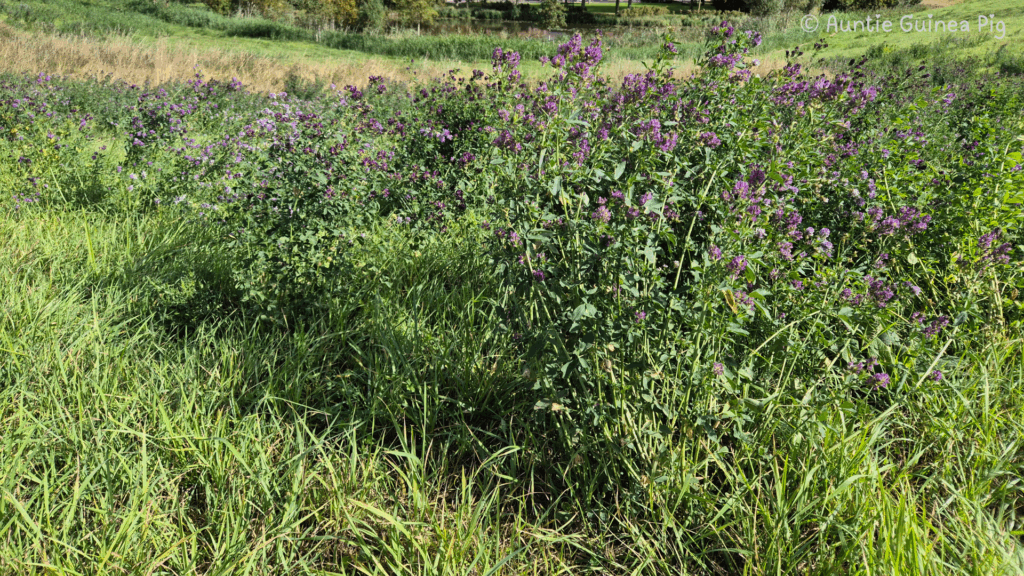 Alfafa plants tend to cluster together in small bushes
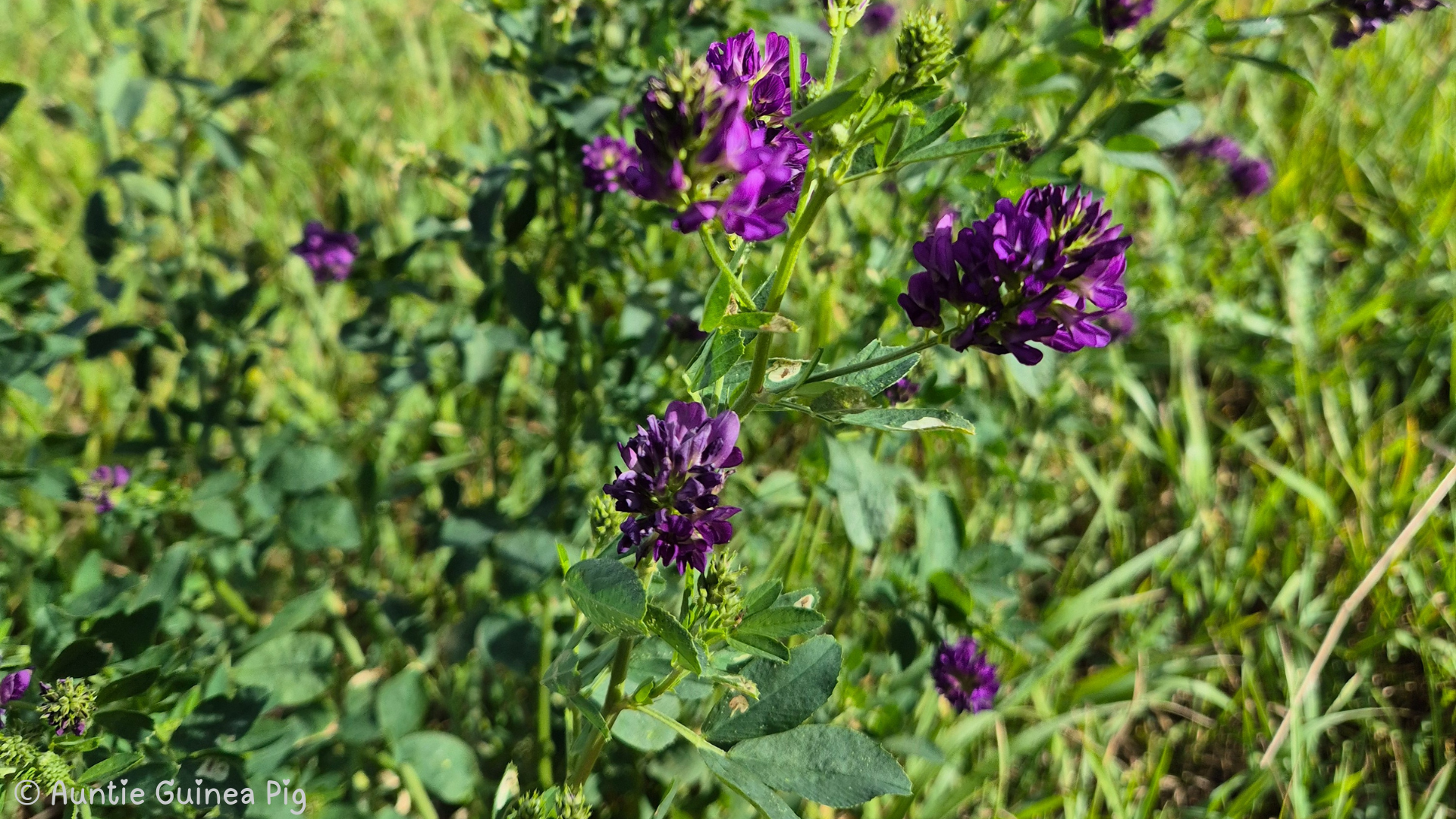
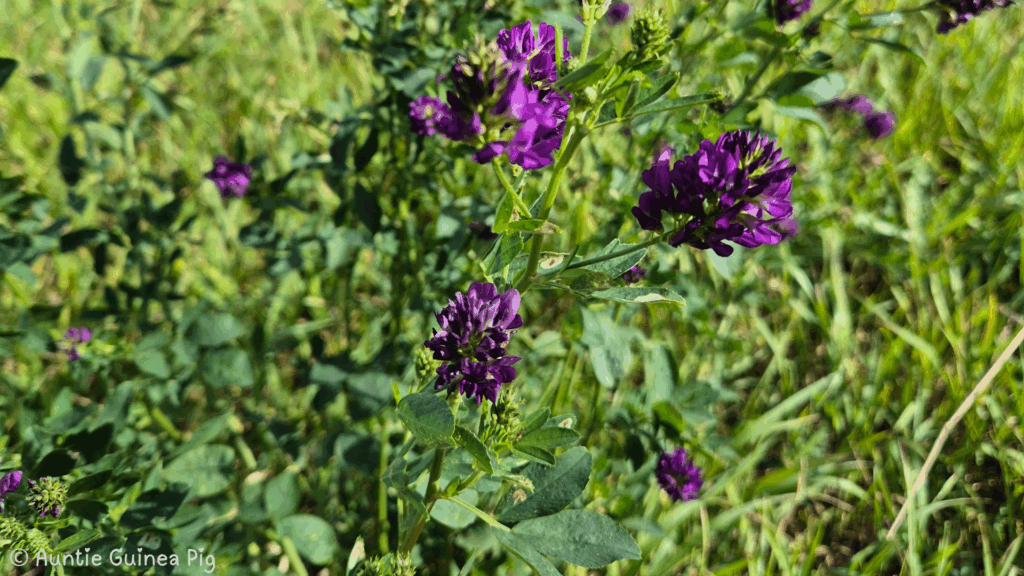 The flowers of alfafa bloom in a deep purple color.
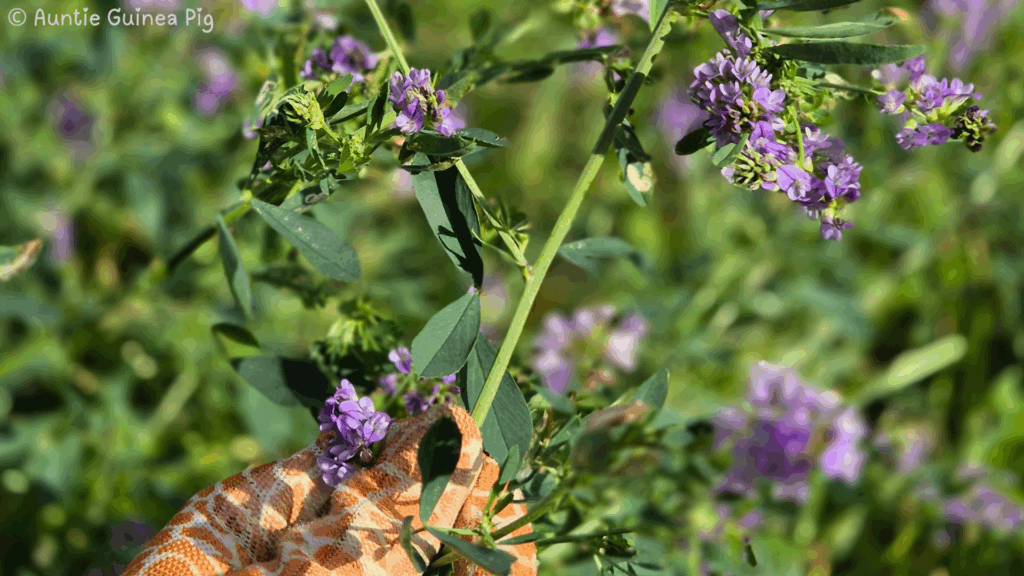 A younger alfafa plant has lilac flowers.
Alfafa or lucerne is easy to recognize when it has flowers. They bloom from a lighter lilac color to a deep purple. The leaves grow in threes on a stem. They are not shiny or oily. The tip of the oval shape is pointy and feels rough like sandpaper. The whole plant will grow up to a meter high.
On young plants without flowers, the leaves will look almost like clovers, but will be longer and more oval in shape and no color differences or markings.
When and where does alfafa grow
Alfafa hibernates to survive the winter and will begin to create new leaves in early spring. The flowers bloom from June to September.[1][2] The plant occurs in warm, temperate climates, as can be found in Europe, parts of North America, Africa and Asia. Alfafa originated in Asia.
Different names for alfafa
Alfafa is most commonly used, but this plant is also called lucerne. Here are some common names in different languages.
| Latin | Medicago sativa |
| English | Alfafa – Lucerne |
| German | Luzerne – Alfafa, Schneckenklee |
| French | Luzerne – Luzerne cultivée |
| Spanish | Lucerna – Alfafa, mielga |
| Dutch | Luzerne |
| Danish | Lucerne – Alfafa |
Contents and nutrients of wild alfafa
Alfafa is a common feed plant for guinea pigs, which means you can offer it in large quantities. You’ve probably heard of alfafa hay, which is a popular dried food source for guinea pigs and bunnies. Unfortunately, when it is dried, it loses a lot of its nutrients and moisture. Freshly picked, your guinea pig (and you!) can eat the flowers, the stems and the leaves. The taste is quite bitter and a bit like peas[1], which makes it a popular plant among rodents.
The plant contains a relative high amount of vitamin K and carotenes. It is calcium-rich and contains a lot of chlorophyll.[1] In combination with a green diet, these fytonutrients are very important a guinea pig’s digestive system.
Medicinal uses of alfafa
Alfafa is not very strongly medicinal, which makes it a suitable feed plant in large amounts. The high amount of chlorophyll and vitamin K has a positive effect on the skin, digestive system, muscles.[2] It’s mildly diuretic.
When the flowers have dried up, the seeds can be ground into a powder or eaten raw. They help regulate blood sugar and cholesterol.[2]
How to plant alfafa yourself
Its a nitrogen-binding plant, so it will help nurture the diversity of the area in which it grows. Alfafa likes soil that is rich in calcium.[1] It also likes to be the highest plant in a grassland, so it will not usually grow close to trees. It’s a plant that requires some space to thrive.
Sources
- Eetbare Wilde Planten (Fleischhauer, S.G., Guthmann, J., Spiegelberger, R.), 2015. Schildpad Boeken, ISBN: 978-90-77463-25-3. Transl. from German
- Welke Eetbare Wilde Plant is dat? (Bastgen, C., Schröder, B., Zurlutter, S.), 2023. Kosmos Uitgevers, ISBN: 978-90-4392-881-6. Transl. from German